
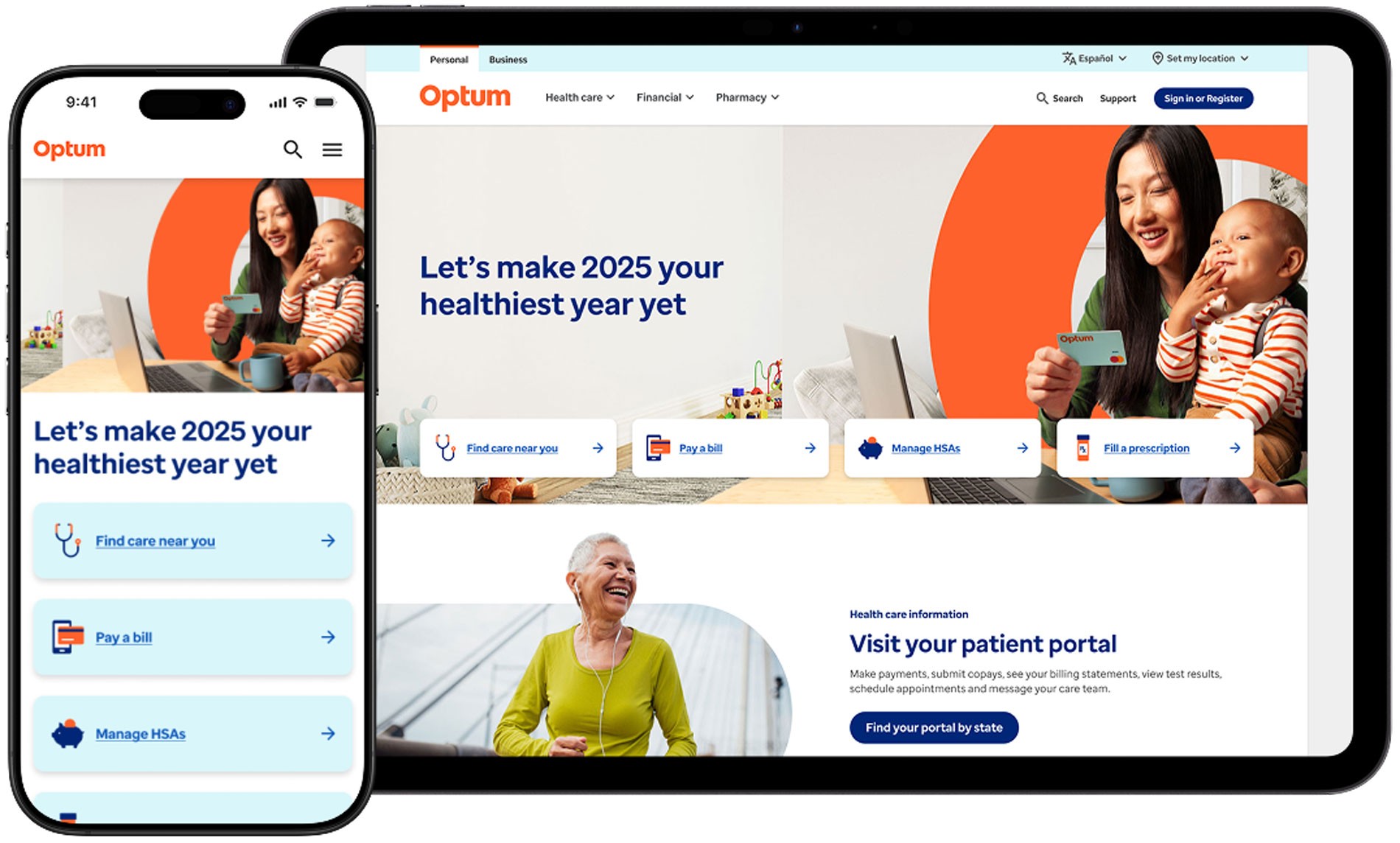
Optum.com Homepage Redesign
Improving the front door of a complex digital ecosystem
Optum’s homepage was a crowded, low-clarity entry point serving a wide range of user needs. I helped reframe it as an experience-improvement effort by using behavioral signals, cross-functional alignment, and prototype-led exploration to improve clarity, engagement, and next-step completion.
Role
Lead designer for homepage experience improvements
Teams
Product, content, engineering, accessibility, brand, analytics
Scope
Homepage clarity, modular content direction, phased personalization strategy
13%
reduction in bounce rate
40%
increase in engagement
24%
increase in task completion
Challenge
Optum’s homepage was trying to serve too many audiences through a static, crowded experience. Important content had weak information scent, users were not engaging deeply with key areas of the page, and next steps were not always clear.
Why it mattered
As the front door to a broad healthcare ecosystem, the homepage needed to help people quickly understand where to go, what mattered to them, and what action to take next.
Who needed what
Customers
- Clearer pathways based on intent
- Stronger visual hierarchy and content relevance
- Better next-step clarity
Business
- Higher engagement across core content
- Better task completion
- A homepage that could evolve over time
Internal teams
- A structure that content and product teams could iterate on
- A direction that worked within platform constraints
- A clearer foundation for future personalization
My role
I led a rapid cross-functional redesign effort focused on improving clarity, discoverability, and engagement through prototype-led decision making.
I was responsible for
- Analyzing behavior patterns and low-engagement zones
- Aligning cross-functional partners around opportunity areas
- Prototyping improvements to page clarity and structure
- Helping shape a phased path from quick wins to scalable personalization
Key partners
- Product
- Content Strategy
- Engineering
- Accessibility
- Brand
- Analytics
What became clear
01
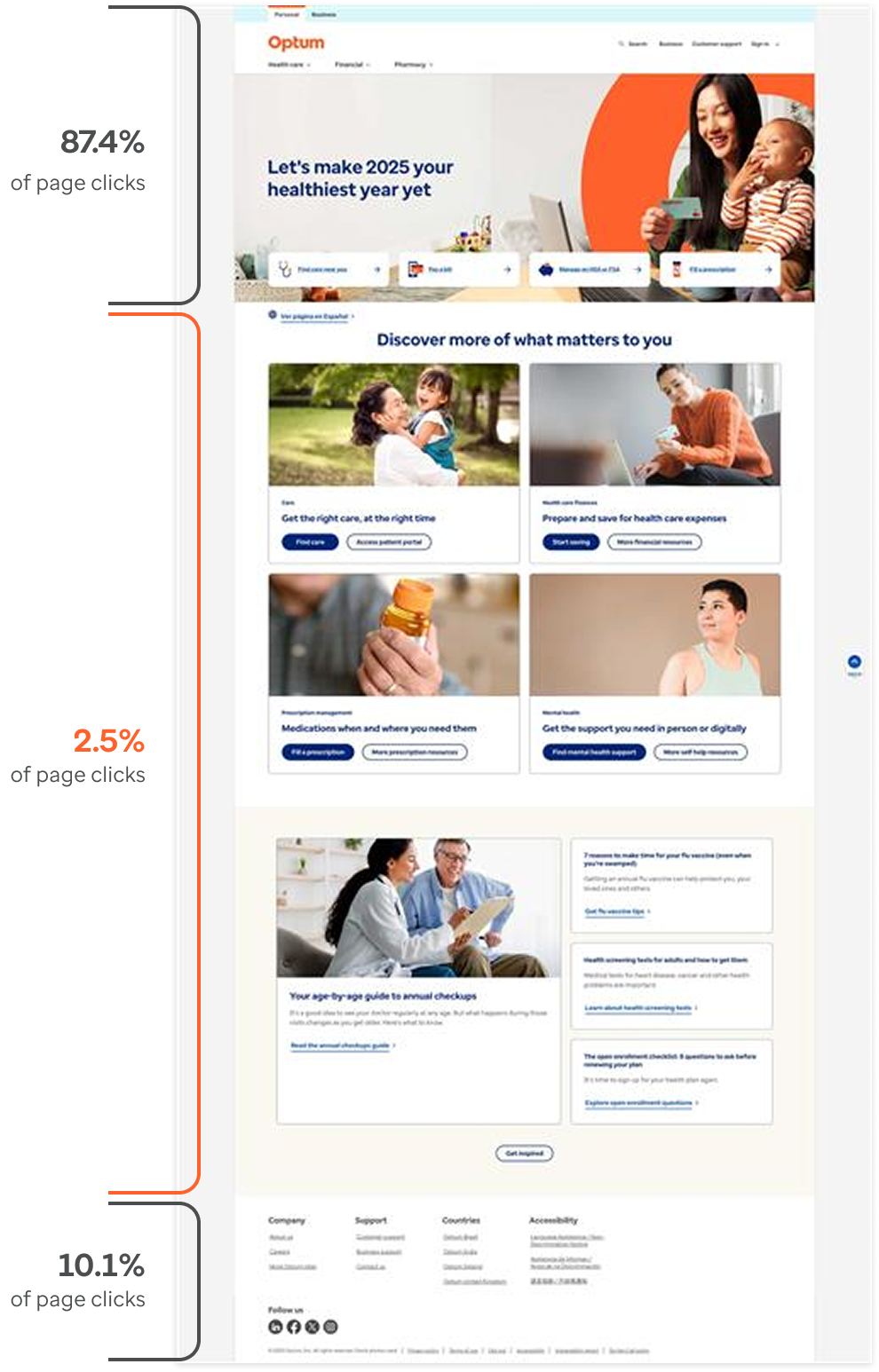
Attention was clustered
The homepage was overloaded, but not all parts were equally valuable. User attention clustered around certain areas while large sections underperformed.
02
User intent was too broad for one static page
A single static homepage could not effectively serve the range of user intents visiting Optum.com.
03
Better structure mattered more than a rebuild
Meaningful improvements did not require rebuilding the platform. Some of the strongest gains could come from improving hierarchy, content framing, and composition within existing constraints.
How the experience evolved
Phase 1
Establish clarity
I focused first on improving hierarchy, visual clarity, and entry points so users could orient faster and identify the most relevant next step.
Phase 2
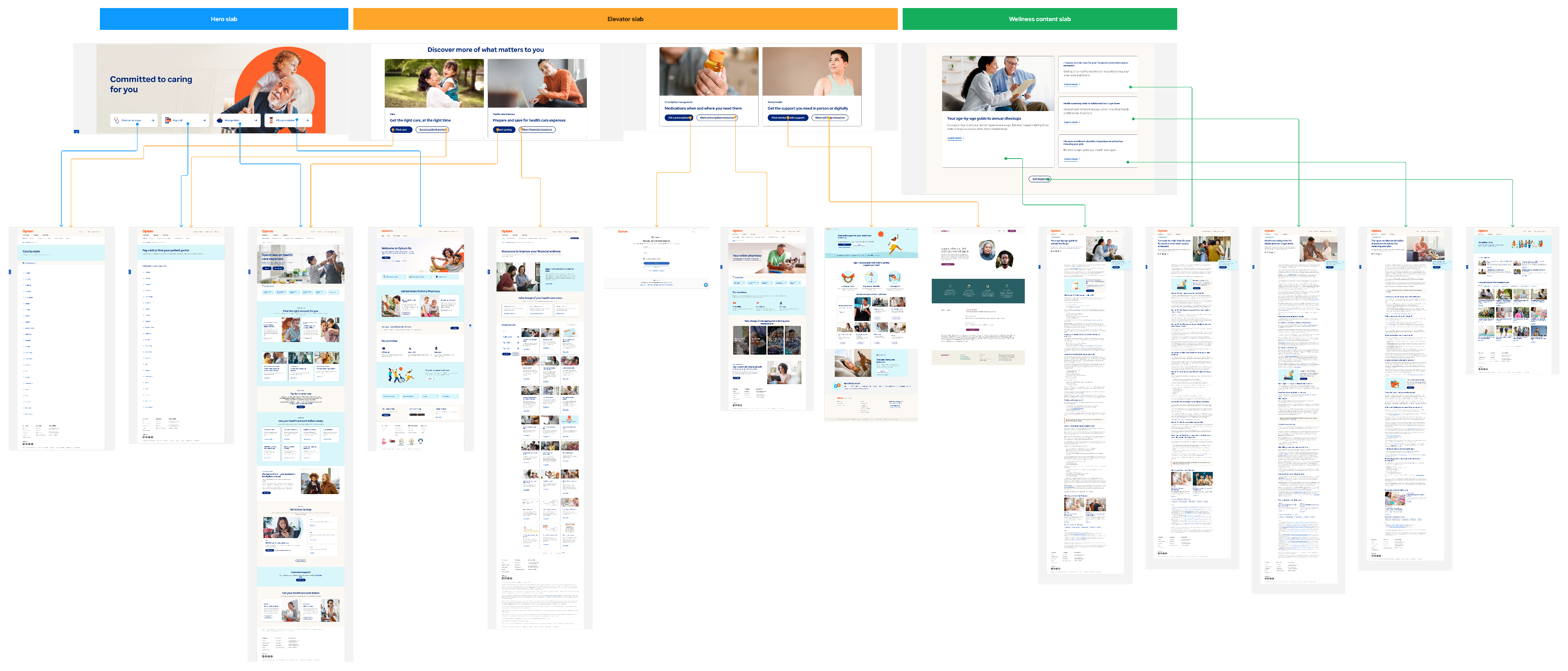
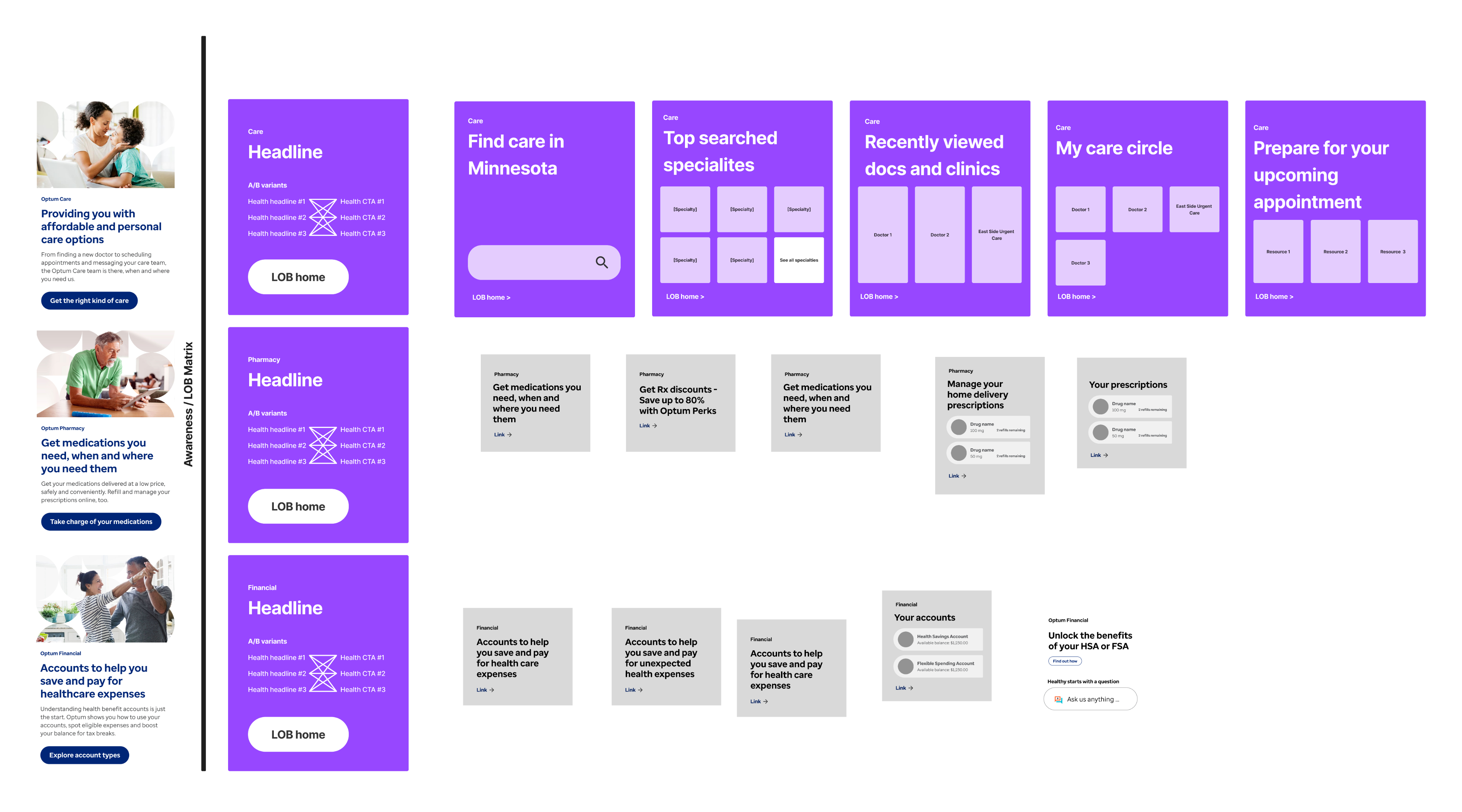
Introduce modular content
Once the experience was clearer, I helped define a modular content approach that could better support multiple audience needs and enable faster iteration across teams.
Phase 3
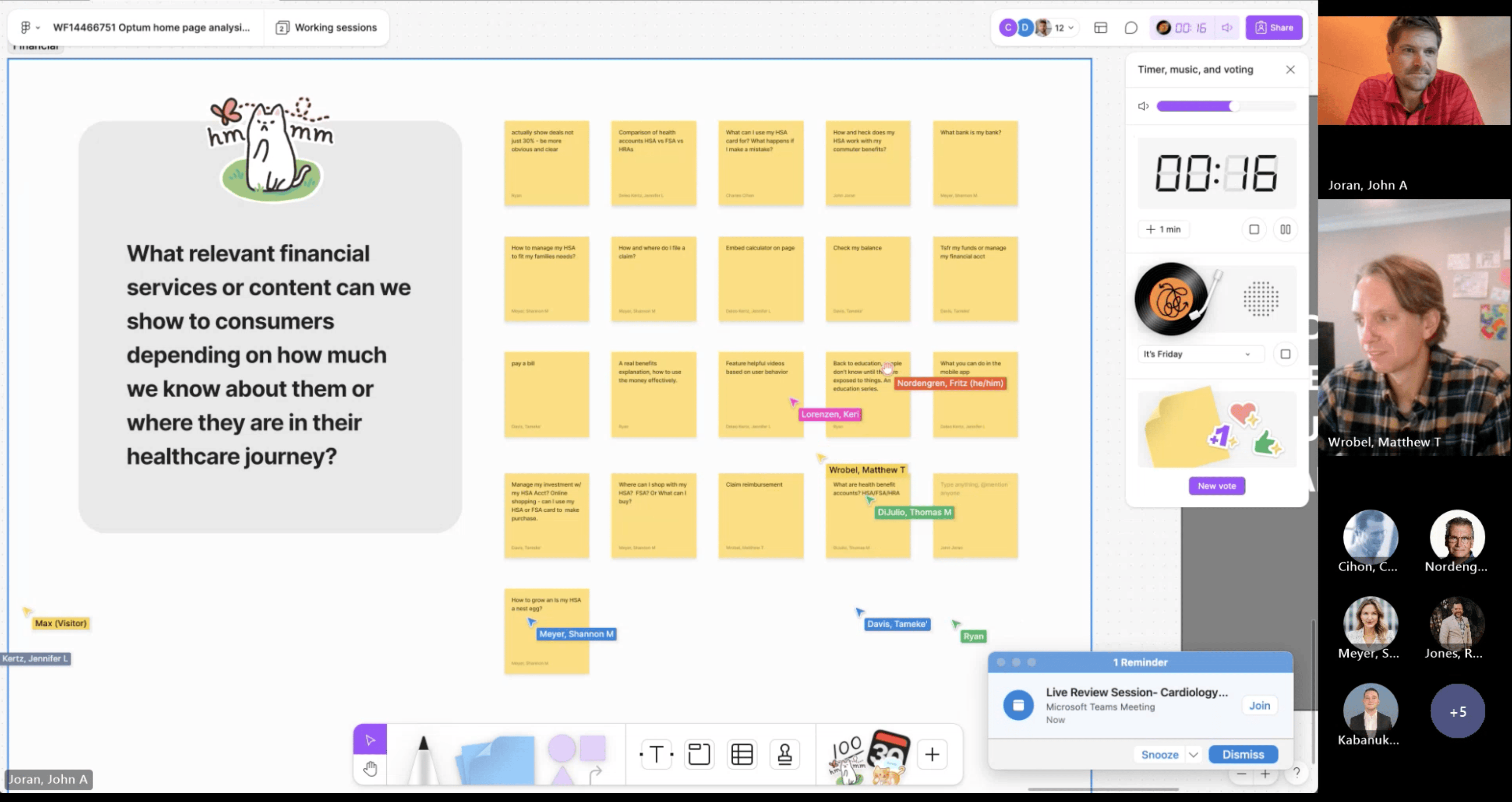
Create a path toward personalization
From there, the homepage evolved from a one-size-fits-all destination into a more flexible system with opportunities to adapt content and pathways based on user context and behavior.
Key design decisions

Reframe the homepage around audience intent
I shifted the structure toward clearer user needs and next steps rather than treating the page as a general content dump.

Improve visual hierarchy within existing templates
I explored better composition, imagery direction, and content emphasis to make the experience easier to scan and understand without requiring major engineering changes.

Design for evolution, not a one-time redesign
I helped move the homepage toward a phased system that could support modular content and future personalization instead of locking the team into another static redesign cycle.
Tradeoffs + Constraints
Constraint: The homepage was built on existing AEM componentsResponse: I focused on high-impact improvements that could be achieved through design decisions, composition, and content structure rather than new functionality.
Constraint: Many stakeholders influenced the pageResponse: I aligned product, content, engineering, accessibility, brand, and analytics around a clearer experience direction and phased roadmap.
Constraint: One page needed to serve many audiencesResponse: I introduced a modular, audience-aware structure that created a more flexible foundation for future adaptation.
Outcomes + Signals
What changed
- 13% reduction in bounce rate
- 40% increase in engagement
- 24% increase in task completion
For usersThe homepage became easier to scan, easier to understand, and better at guiding people toward meaningful next steps.
For the organizationThe work created a more scalable content structure, improved cross-functional alignment, and established a clearer path toward ongoing optimization and personalization.
Optum.com Homepage Redesign
Improving the front door of a complex digital ecosystem
Optum’s homepage was a crowded, low-clarity entry point serving a wide range of user needs. I helped reframe it as an experience-improvement effort by using behavioral signals, cross-functional alignment, and prototype-led exploration to improve clarity, engagement, and next-step completion.
Role
Lead designer for homepage experience improvements
Teams
Product, content, engineering, accessibility, brand, analytics
Scope
Homepage clarity, modular content direction, phased personalization strategy
13%
reduction in bounce rate
40%
increase in engagement
24%
increase in task completion
Challenge
Optum’s homepage was trying to serve too many audiences through a static, crowded experience. Important content had weak information scent, users were not engaging deeply with key areas of the page, and next steps were not always clear.
Why it mattered
As the front door to a broad healthcare ecosystem, the homepage needed to help people quickly understand where to go, what mattered to them, and what action to take next.
Who needed what
Customers
- Clearer pathways based on intent
- Stronger visual hierarchy and content relevance
- Better next-step clarity
Business
- Higher engagement across core content
- Better task completion
- A homepage that could evolve over time
Internal teams
- A structure that content and product teams could iterate on
- A direction that worked within platform constraints
- A clearer foundation for future personalization
My role
I led a rapid cross-functional redesign effort focused on improving clarity, discoverability, and engagement through prototype-led decision making.
I was responsible for
- Analyzing behavior patterns and low-engagement zones
- Aligning cross-functional partners around opportunity areas
- Prototyping improvements to page clarity and structure
- Helping shape a phased path from quick wins to scalable personalization
Key partners
- Product
- Content Strategy
- Engineering
- Accessibility
- Brand
- Analytics
What became clear
01
Attention was clustered
The homepage was overloaded, but not all parts were equally valuable. User attention clustered around certain areas while large sections underperformed.
02
User intent was too broad for one static page
A single static homepage could not effectively serve the range of user intents visiting Optum.com.
03
Better structure mattered more than a rebuild
Meaningful improvements did not require rebuilding the platform. Some of the strongest gains could come from improving hierarchy, content framing, and composition within existing constraints.
How the experience evolved
Phase 1
Establish clarity
I focused first on improving hierarchy, visual clarity, and entry points so users could orient faster and identify the most relevant next step.
Phase 2
Introduce modular content
Once the experience was clearer, I helped define a modular content approach that could better support multiple audience needs and enable faster iteration across teams.
Phase 3
Create a path toward personalization
From there, the homepage evolved from a one-size-fits-all destination into a more flexible system with opportunities to adapt content and pathways based on user context and behavior.
Key design decisions
Reframe the homepage around audience intent
I shifted the structure toward clearer user needs and next steps rather than treating the page as a general content dump.
Improve visual hierarchy within existing templates
I explored better composition, imagery direction, and content emphasis to make the experience easier to scan and understand without requiring major engineering changes.
Design for evolution, not a one-time redesign
I helped move the homepage toward a phased system that could support modular content and future personalization instead of locking the team into another static redesign cycle.
Tradeoffs + Constraints
Constraint: The homepage was built on existing AEM componentsResponse: I focused on high-impact improvements that could be achieved through design decisions, composition, and content structure rather than new functionality.
Constraint: Many stakeholders influenced the pageResponse: I aligned product, content, engineering, accessibility, brand, and analytics around a clearer experience direction and phased roadmap.
Constraint: One page needed to serve many audiencesResponse: I introduced a modular, audience-aware structure that created a more flexible foundation for future adaptation.
Outcomes + Signals
What changed
- 13% reduction in bounce rate
- 40% increase in engagement
- 24% increase in task completion
For usersThe homepage became easier to scan, easier to understand, and better at guiding people toward meaningful next steps.
For the organizationThe work created a more scalable content structure, improved cross-functional alignment, and established a clearer path toward ongoing optimization and personalization.
Optum.com Homepage Redesign
Improving the front door of a complex digital ecosystem
Optum’s homepage was a crowded, low-clarity entry point serving a wide range of user needs. I helped reframe it as an experience-improvement effort by using behavioral signals, cross-functional alignment, and prototype-led exploration to improve clarity, engagement, and next-step completion.
Role
Lead designer for homepage experience improvements
Teams
Product, content, engineering, accessibility, brand, analytics
Scope
Homepage clarity, modular content direction, phased personalization strategy
13%
reduction in bounce rate
40%
increase in engagement
24%
increase in task completion
Challenge
Optum’s homepage was trying to serve too many audiences through a static, crowded experience. Important content had weak information scent, users were not engaging deeply with key areas of the page, and next steps were not always clear.
Why it mattered
As the front door to a broad healthcare ecosystem, the homepage needed to help people quickly understand where to go, what mattered to them, and what action to take next.
Who needed what
Customers
- Clearer pathways based on intent
- Stronger visual hierarchy and content relevance
- Better next-step clarity
Business
- Higher engagement across core content
- Better task completion
- A homepage that could evolve over time
Internal teams
- A structure that content and product teams could iterate on
- A direction that worked within platform constraints
- A clearer foundation for future personalization
My role
I led a rapid cross-functional redesign effort focused on improving clarity, discoverability, and engagement through prototype-led decision making.
I was responsible for
- Analyzing behavior patterns and low-engagement zones
- Aligning cross-functional partners around opportunity areas
- Prototyping improvements to page clarity and structure
- Helping shape a phased path from quick wins to scalable personalization
Key partners
- Product
- Content Strategy
- Engineering
- Accessibility
- Brand
- Analytics
What became clear
01
Attention was clustered
The homepage was overloaded, but not all parts were equally valuable. User attention clustered around certain areas while large sections underperformed.
02
User intent was too broad for one static page
A single static homepage could not effectively serve the range of user intents visiting Optum.com.
03
Better structure mattered more than a rebuild
Meaningful improvements did not require rebuilding the platform. Some of the strongest gains could come from improving hierarchy, content framing, and composition within existing constraints.
How the experience evolved
Phase 1
Establish clarity
I focused first on improving hierarchy, visual clarity, and entry points so users could orient faster and identify the most relevant next step.
Phase 2
Introduce modular content
Once the experience was clearer, I helped define a modular content approach that could better support multiple audience needs and enable faster iteration across teams.
Phase 3
Create a path toward personalization
From there, the homepage evolved from a one-size-fits-all destination into a more flexible system with opportunities to adapt content and pathways based on user context and behavior.
Key design decisions
Reframe the homepage around audience intent
I shifted the structure toward clearer user needs and next steps rather than treating the page as a general content dump.
Improve visual hierarchy within existing templates
I explored better composition, imagery direction, and content emphasis to make the experience easier to scan and understand without requiring major engineering changes.
Design for evolution, not a one-time redesign
I helped move the homepage toward a phased system that could support modular content and future personalization instead of locking the team into another static redesign cycle.
Tradeoffs + Constraints
Constraint: The homepage was built on existing AEM componentsResponse: I focused on high-impact improvements that could be achieved through design decisions, composition, and content structure rather than new functionality.
Constraint: Many stakeholders influenced the pageResponse: I aligned product, content, engineering, accessibility, brand, and analytics around a clearer experience direction and phased roadmap.
Constraint: One page needed to serve many audiencesResponse: I introduced a modular, audience-aware structure that created a more flexible foundation for future adaptation.
Outcomes + Signals
What changed
- 13% reduction in bounce rate
- 40% increase in engagement
- 24% increase in task completion
For usersThe homepage became easier to scan, easier to understand, and better at guiding people toward meaningful next steps.
For the organizationThe work created a more scalable content structure, improved cross-functional alignment, and established a clearer path toward ongoing optimization and personalization.